Animation & motion

Punctuation Peaks

Nine animated adventures in punctuation for BBC Bitesize.

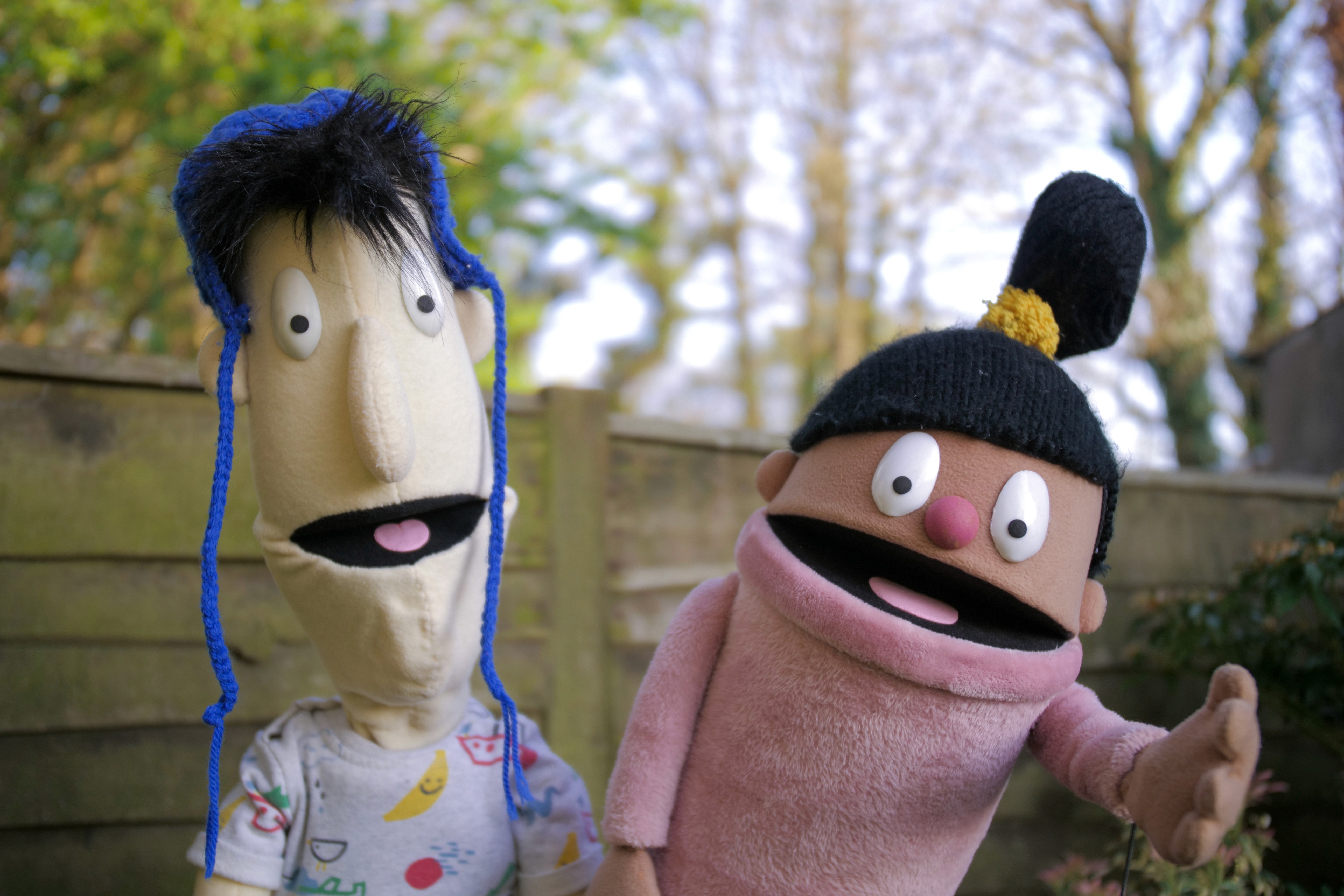
At an island campsite, a cast of curious characters tell stories, get into scrapes and show what punctuation does. We built the series around those encounters so each Key Stage 2 lesson had a scene and a set of characters to make it concrete.

Client
BBC Bitesize
Audience
Key Stage 2
Output
Nine animated episodes
Studio role
Writing, design, animation, audio and post-production
Around the campfire
The characters gather around the fire at the island campsite.

Give punctuation a part in the story.

The island campsite gave the episodes a shared setting. Characters such as Bigfoot Bill and Cinders brought personality to the examples, so the writing could show how punctuation works through the things they say and do. The early pitch explored the island and what its cast might look like.

1 of 4
Early pitch
An island for the story
A painted map-like view from the pitch, with notes on the island’s different settings.

From a painted clearing to a scene.

An early painting set out the forest clearing and its tent. The wide 3D study shows the space without the cast, while the storyboard test places sketched performances inside the set. The storyboard sheet shows how the framing changes from beat to beat. The episode still brings the lighting, characters and set together.

1 of 5
Environment concept
The campsite in 2D
An early painted sketch of a forest clearing, with the tent and campfire at its centre.

Beyond the campsite.

The playground and mess hall gave the cast other places to gather. These clay renders show how the team laid out each space, from the playground’s van and slide to the mess hall’s tables and small stage.

Clay render
The playground
The outdoor set before the final materials, with a van, slide and bunting.
Clay render
The mess hall
A wide view of the room, its small stage and the furniture around it.

A digital world with a handmade feel.

The visual development drew on folklore and the directness of emoticons. Stylised shaders, lighting and expressive animation gave the 3D world a tactile, stop-motion feel. The last image is a separate composite study that combines a rendered playground with a drawn element.

1 of 4
Episode still
Cinders by the board
A finished interior frame showing the warm lighting and textured character design.

Credits & support.

Direction and design
Andrew McHugh
Production, audio and post-production
David Baxter
Writing and voice acting
Michael McNulty
Education consultant
Kevin Rafferty
Voice acting
Sarah Lyle and Philip Sacramento
3D modelling, rigging and concepts
David Pollock
Rigging and animation
Matthew Kernaghan
Animation
Matthew Hamill and Eve McGuicken
2D concepts and storyboards
Emma Dunleavy

What are you working towards?

Boom Clap Play

A Belfast studio. Design, motion, sound and interaction.

© 2026 Boom Clap Play

Create a free website with Framer, the website builder loved by startups, designers and agencies.